
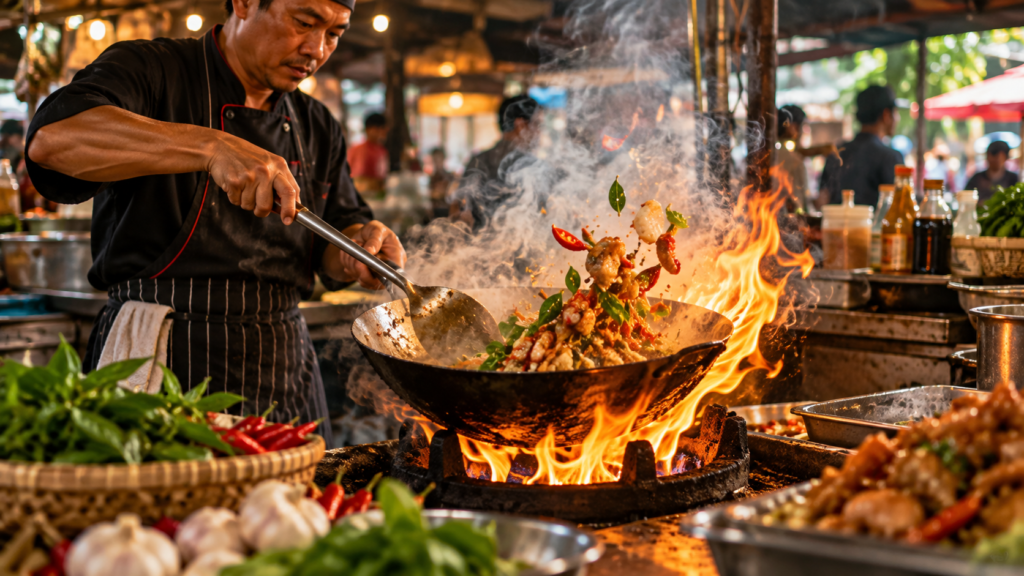
Walk past any proper Thai kitchen in the middle of a busy Friday night dinner rush. The sound hits you first. A fierce, roaring hiss. Then comes the scent. It’s a heady mix of scorched oil, caramelised garlic, and a distinct charred aroma that makes your stomach rumble instantly.
That unmistakable smoky flavour is the holy grail of Southeast Asian cooking. Chefs call it wok hei, the breath of the wok.
The Chemistry of the Char
Getting that authentic street-food flavour into a simple plate of Pad See Ew isn’t just about throwing flat noodles into a hot pan. It requires chemistry. When searing heat meets cold oil and perfectly seasoned proteins, magic happens on a microscopic level.
Moisture instantly vaporises. The cooking oil breaks down and forms tiny, airborne droplets. Those droplets actually catch fire for a fraction of a second when the chef tosses the food through the air above the open flame. That tiny burst of fire licks the ingredients directly. It sears a smoky, toasted essence right into the dish.
This isn’t a typical backyard barbecue flavour. It’s totally different. The wok imparts a dry, slightly metallic char that balances the sweet, salty, and spicy notes of Thai cuisine perfectly. Ever tried making a stir-fry at home and ended up with a soggy, sad pile of boiled vegetables? A lack of wok hei is the culprit every single time.
Why the Home Cooktop Fails
Achieving this signature taste demands ridiculous heat. Far more heat than a standard domestic electric cooktop or induction stove can ever push out. A home stove is brilliant for boiling spuds or simmering a slow-cooked winter stew. But it utterly fails when tasked with authentic, high-velocity wok cooking.
To get true wok hei, the carbon steel needs to sit well above 300 degrees Celsius. Drop a handful of cold chicken into a pan at home, and the temperature immediately plummets. The food simply stews in its own juices. To keep that pan screaming hot, commercial kitchens rely on a heavy-duty LPG gas burner to deliver a massive, continuous blast of thermal energy. It recovers heat instantly. No waiting around. Just continuous, aggressive cooking.
The Secret Life of Carbon Steel
There is another silent partner in this cooking process. It’s the wok itself.
Look closely inside a commercial kitchen, and you will notice the pans aren’t shiny and silver. They are pitch black. This black coating is a hard-earned layer of polymerised oil. It builds up over thousands of fiery cooking sessions. A properly seasoned carbon steel wok acts like a sponge for flavour, retaining the culinary memories of countless meals.
It provides a natural, glass-like non-stick surface. This lets chefs toss sticky rice noodles without tearing them to shreds. This seasoned layer also contributes subtly to the overall smoky profile of the dish. You simply can’t replicate this with a brand new, non-stick Teflon pan from the local department store. In fact, Teflon would literally melt under the extreme temperatures required for authentic Thai street food.
The Clock is Ticking
Heat is only half the battle. Speed is the other critical factor.
Watch a skilled wok chef work the line. They don’t leave the food sitting still for a second. They push, pull, scrape, and toss. A proper Thai stir-fry takes mere minutes from start to finish. This hyper-fast cooking method is exactly why sourcing high-quality, fresh ingredients matters so much in traditional kitchens.
A limp carrot or a bruised piece of bok choy simply can’t survive the intense thermal shock of a commercial wok. Crisp, firm produce holds its structural integrity. It chars beautifully on the outside while staying vibrant and crunchy on the inside. Every second counts. Leave the rice noodles for three seconds too long, and they burn bitter. Take them off two seconds too early, and they lack that beautiful dark caramelisation. It takes years to build the muscle memory required to nail that exact window of perfection.
Plant-Based Flavour Profiles
There is a stubborn myth floating around the culinary world right now. People think you always need animal fats like lard or pork belly to get a rich, complex flavour profile in a stir-fry.
Wok hei works wonders on vegetables, firm tofu, and mushrooms. The intense heat aggressively breaks down the natural sugars in plant-based ingredients to create deep, savoury umami notes that rival any meat dish. A well-executed vegetable Pad Krapow will easily go toe-to-toe with the beef version on the same table. For diners seeking entirely plant-based options, exploring a dedicated vegan menu reveals just how incredibly versatile this cooking technique really is. A charred piece of Chinese broccoli tossed in soy sauce and fresh chilli hits the palate with a staggering depth of flavour. The fire does the heavy lifting.
Experience True Wok Hei in Warrawong
Reading about the science of stir-frying is one thing. Smelling it and tasting it is another entirely.
You don’t need to book a flight to Bangkok or scour night markets to experience the genuine breath of the wok. Authentic, uncompromising Thai food is sitting right here in the Illawarra. At Chong Kho in Warrawong brings that intense heat, traditional technique, and perfect balance of flavours directly to your local table.
Ready to trade those soggy homemade stir-fries for the real deal? Book a table or order takeaway at At Chong Kho today and taste the smoky, charred difference for yourself.